Group Sales
Reengineering MICE Sales: How AI and Automation Are Transforming Group and Event Revenue for Hotels

MeetingPackage

The global meetings and events market is worth more than a trillion dollars. Yet many hotel groups still manage this business with processes that belong in the early 2000s.
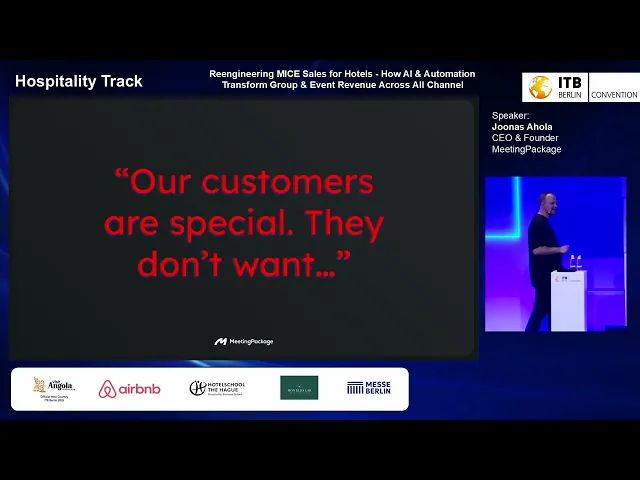
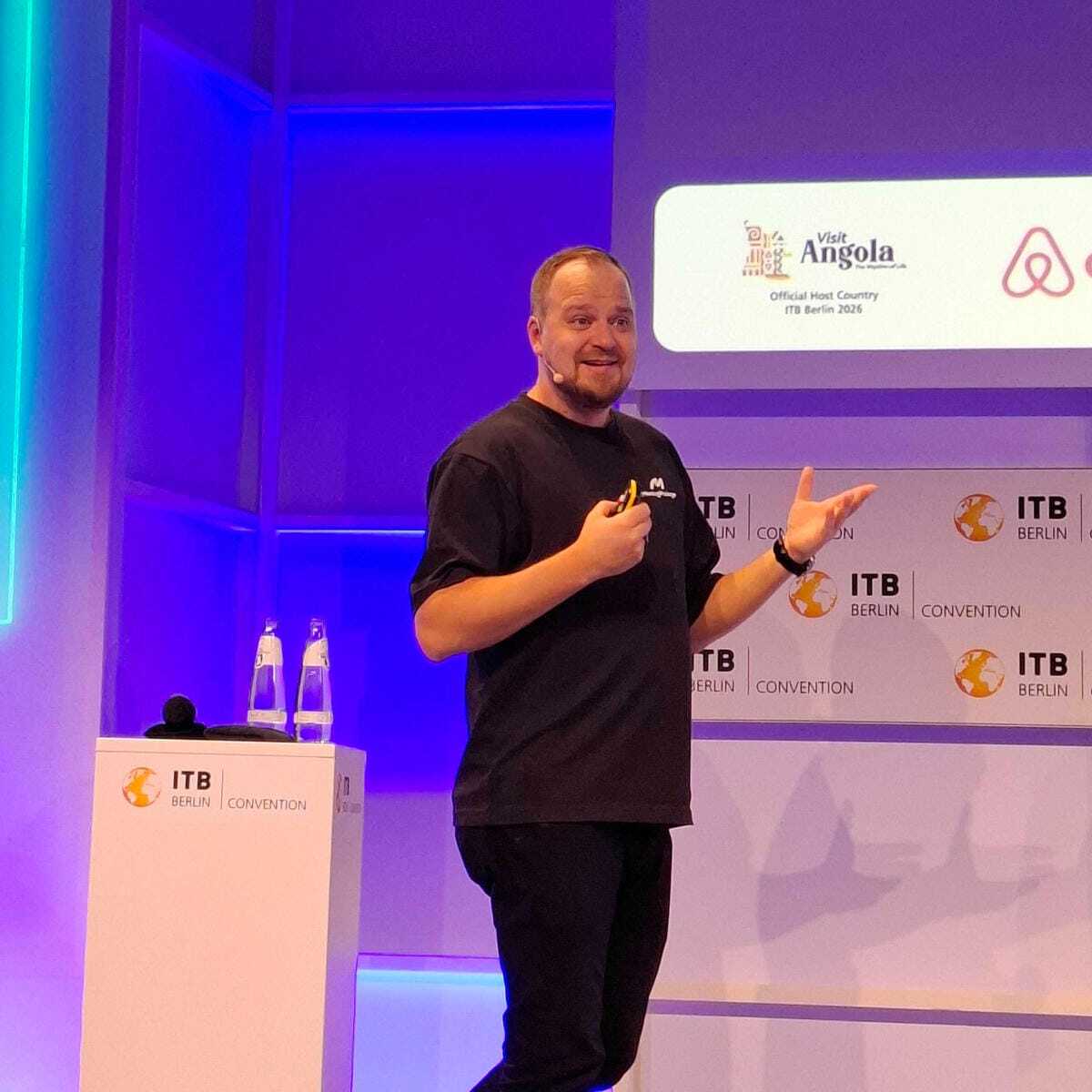
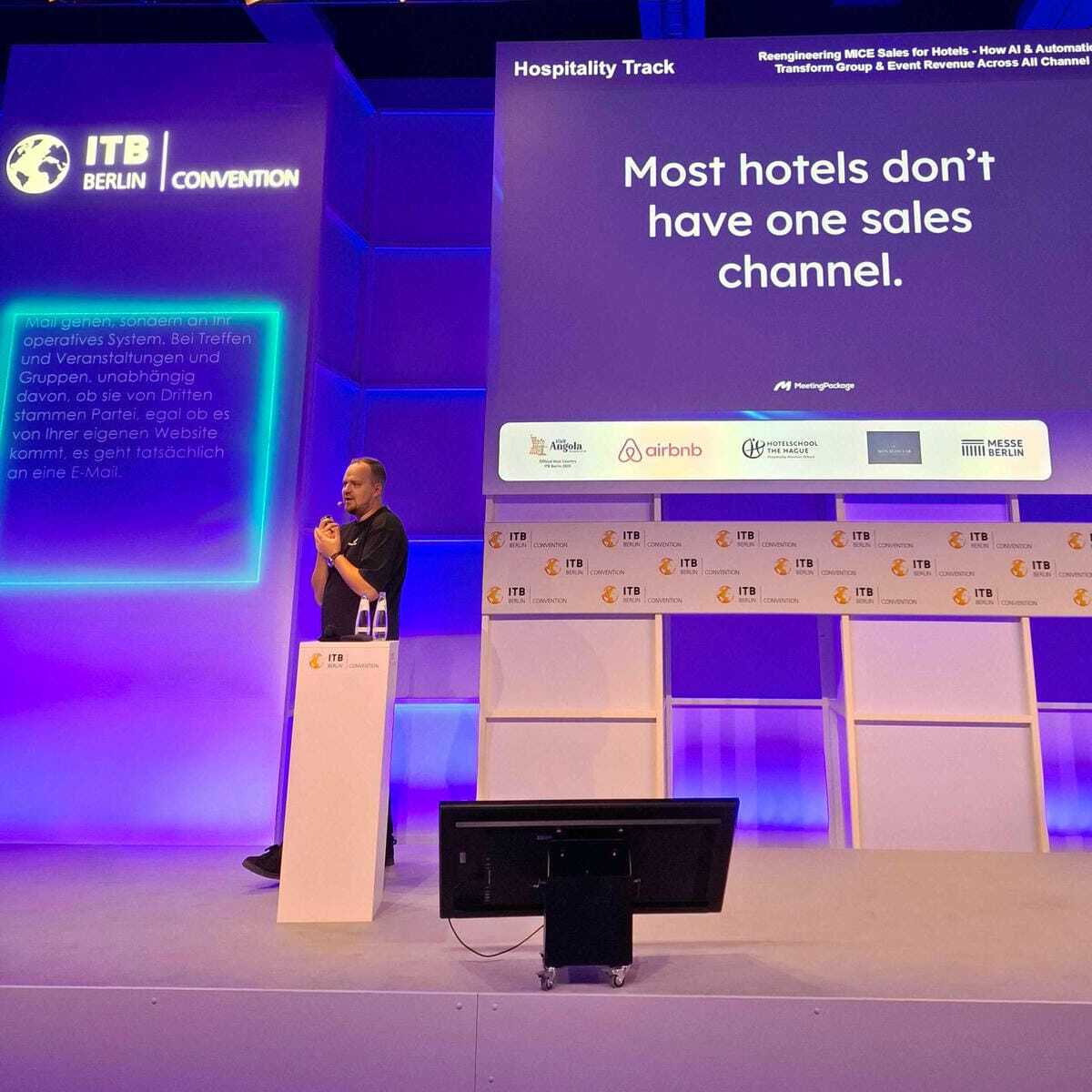
At ITB Berlin, our CEO and founder Joonas Ahola made the case for why MICE sales has fallen so far behind other hospitality segments — and what hotels need to do about it. His argument cuts through the AI hype to something more fundamental: before any technology can help, hotels need to fix the underlying systems that power the booking process.
The Reality of MICE Sales Today
Hotels receive meeting and group requests from four main sources: email, phone, their own website, and third-party distribution channels. In theory, these all feed into operational systems where sales teams can respond and convert quickly. In practice, most of them end up in a shared email inbox.
Even requests submitted through hotel websites or third-party platforms frequently arrive as unstructured emails rather than bookings. Sales teams then manually transfer information between systems, prepare proposals, and negotiate details across long email threads.
Around 80 percent of meetings and events inquiries still arrive through email. That single fact explains much of what follows.
Sales teams end up managing inboxes instead of closing business. And customers are left waiting — in a world where nearly every other travel product can be booked in seconds.
A Conversion Problem in Plain Sight
The operational drag shows up clearly in the numbers. Across the industry, MICE conversion rates typically sit between 7 and 15 percent.
When you dig into why so many opportunities go nowhere, a few patterns repeat:
Around 50 percent of requests are turned down by the hotel
Many inquiries simply go unanswered fast enough
Slow response times push customers to book elsewhere
Negotiations drag on until pricing or terms become a barrier
Often, sales teams already know a deal is unlikely and choose to decline rather than invest hours in a proposal they don't expect to win. The result is substantial lost revenue — but what's striking is that many of the friction points could be resolved before the customer even sends an inquiry. Pricing, availability, terms, venue capabilities: when this information is buried behind manual processes, every booking becomes needlessly complicated.
Why MICE Has Lagged Behind
The meetings and events market is enormous, yet digital transformation here has moved slowly. Ahola points to three compounding reasons.
A culture of control
MICE sales has long been relationship-driven, and many teams prefer direct conversations and manual negotiation. There's a belief that personal service requires human involvement at every stage.
But when you ask planners what they actually want, the answer is simpler: speed and clarity. They want to know quickly whether a venue is available, what it costs, and how to move forward. Anything that delays those answers — however well-intentioned — is friction.
Disconnected systems
Hotels typically run multiple platforms: property management systems, sales and catering software, CRM tools, channel distribution platforms, and website booking tools. Without real integration between them, automating the sales process is nearly impossible.
The first integration between MeetingPackage and the widely used Opera Sales & Catering system didn't happen until 2018. That tells you something about how recently real-time availability and pricing for meetings and events became technically feasible — and how much ground the industry still needs to cover.
This is also the core limitation of AI-first thinking: without connected systems and reliable data, AI just becomes a more sophisticated way to process email.
Misreading customer expectations
Many hotels assume their customers prefer traditional communication. The data suggests otherwise.
Planners increasingly expect the same convenience they get from booking a flight or a transient room. They want immediate responses, self-service access to availability and pricing, clear venue information, and the ability to book outside business hours.
Today, around 34 percent of bookings happen outside traditional working hours — evenings and weekends. If meeting inquiries can only be handled during office hours, hotels are leaving a third of their potential business on the table.
Where AI Actually Fits
AI is often positioned as the answer to all of this. The more accurate picture is that AI is a powerful tool — but only when it has something to work with.
Genuine transformation in MICE sales requires three things working in concert:
Customer-facing channels — email, websites, marketplaces, agencies, phone
Operational systems — property management, sales and catering, inventory management
A central technology layer — something that connects these in real time, enabling live access to availability, pricing, and venue data
When that foundation exists, AI can do something genuinely useful: act as an intelligent bridge between a customer's inquiry and the hotel's operational systems. Instead of sorting emails, it can check availability, generate proposals, communicate with customers, manage follow-ups, and support contracting — MeetingPackage AI Agents make this possible across email, phone, search, and booking.
From 7 Percent to 60 Percent
Hotels that build automation on top of connected systems see dramatically different results. Some report conversion rates approaching 60 percent — several times the industry baseline.
Two factors drive most of that improvement.
Response speed. In many cases, winning or losing a booking comes down to hours. A venue that responds within two hours will routinely beat one that takes two days, regardless of what else it offers. Automation makes it possible to deliver proposals in minutes rather than days.
Intelligent routing. Instead of sales teams manually reviewing every inquiry, systems can route requests based on event size, room count, lead time, and revenue potential. Smaller events get automatically quoted or booked online. Mid-size events receive automated proposals. Large or complex events go directly to a sales manager. The team's time shifts toward opportunities that actually need them.
Instant Booking and Instant Quotation
Instant booking is the logical endpoint for straightforward MICE inventory: a customer sees availability, pricing, and venue details, and books directly. No proposal cycle, no conversion funnel — just a booking.
When that happens, the relevant metric shifts from conversion rate to cancellation rate, which is how transient hotel bookings have always been measured.
For more complex events, instant quotation offers much of the same value. AI-generated proposals delivered immediately still leave room for negotiation and customization — they just eliminate the days-long wait that currently kills so many deals.
The Automation Gap
One of the most common mistakes in MICE technology is stopping halfway. Some systems streamline inquiry handling and proposal generation, then drop back to manual contracts, printed documents, and email confirmations. That's better than nothing, but it leaves the most time-consuming parts of the process untouched.
End-to-end automation means connecting every stage: inquiry, proposal, negotiation, follow-up, contracting, and confirmation. Only when all of those pieces are linked does the customer experience become genuinely seamless.
A New Role for Sales Teams
None of this replaces hospitality's human element. What automation does is redirect it.
When technology handles the repetitive and administrative work, sales teams can focus on what they're actually good at: building relationships, solving complex problems, and delivering experiences that clients remember. For hotel groups, centralized automation also enables MICE sales to be managed at an above-property level, freeing individual hotels to concentrate on what happens on the ground.
Where This Is Going
The transformation won't happen overnight, and the industry has plenty of legacy to work through. But the direction is settled.
Hotels that connect their systems, embrace automation, and make availability and pricing visible upfront will outpace those that don't. The technology already exists to make booking a meeting room as frictionless as booking a hotel room.
The question is no longer whether MICE sales will be transformed. It's which hotels decide to get ahead of it — and which ones wait until they have no choice.
The global meetings and events market is worth more than a trillion dollars. Yet many hotel groups still manage this business with processes that belong in the early 2000s.
At ITB Berlin, our CEO and founder Joonas Ahola made the case for why MICE sales has fallen so far behind other hospitality segments — and what hotels need to do about it. His argument cuts through the AI hype to something more fundamental: before any technology can help, hotels need to fix the underlying systems that power the booking process.
The Reality of MICE Sales Today
Hotels receive meeting and group requests from four main sources: email, phone, their own website, and third-party distribution channels. In theory, these all feed into operational systems where sales teams can respond and convert quickly. In practice, most of them end up in a shared email inbox.
Even requests submitted through hotel websites or third-party platforms frequently arrive as unstructured emails rather than bookings. Sales teams then manually transfer information between systems, prepare proposals, and negotiate details across long email threads.
Around 80 percent of meetings and events inquiries still arrive through email. That single fact explains much of what follows.
Sales teams end up managing inboxes instead of closing business. And customers are left waiting — in a world where nearly every other travel product can be booked in seconds.
A Conversion Problem in Plain Sight
The operational drag shows up clearly in the numbers. Across the industry, MICE conversion rates typically sit between 7 and 15 percent.
When you dig into why so many opportunities go nowhere, a few patterns repeat:
Around 50 percent of requests are turned down by the hotel
Many inquiries simply go unanswered fast enough
Slow response times push customers to book elsewhere
Negotiations drag on until pricing or terms become a barrier
Often, sales teams already know a deal is unlikely and choose to decline rather than invest hours in a proposal they don't expect to win. The result is substantial lost revenue — but what's striking is that many of the friction points could be resolved before the customer even sends an inquiry. Pricing, availability, terms, venue capabilities: when this information is buried behind manual processes, every booking becomes needlessly complicated.
Why MICE Has Lagged Behind
The meetings and events market is enormous, yet digital transformation here has moved slowly. Ahola points to three compounding reasons.
A culture of control
MICE sales has long been relationship-driven, and many teams prefer direct conversations and manual negotiation. There's a belief that personal service requires human involvement at every stage.
But when you ask planners what they actually want, the answer is simpler: speed and clarity. They want to know quickly whether a venue is available, what it costs, and how to move forward. Anything that delays those answers — however well-intentioned — is friction.
Disconnected systems
Hotels typically run multiple platforms: property management systems, sales and catering software, CRM tools, channel distribution platforms, and website booking tools. Without real integration between them, automating the sales process is nearly impossible.
The first integration between MeetingPackage and the widely used Opera Sales & Catering system didn't happen until 2018. That tells you something about how recently real-time availability and pricing for meetings and events became technically feasible — and how much ground the industry still needs to cover.
This is also the core limitation of AI-first thinking: without connected systems and reliable data, AI just becomes a more sophisticated way to process email.
Misreading customer expectations
Many hotels assume their customers prefer traditional communication. The data suggests otherwise.
Planners increasingly expect the same convenience they get from booking a flight or a transient room. They want immediate responses, self-service access to availability and pricing, clear venue information, and the ability to book outside business hours.
Today, around 34 percent of bookings happen outside traditional working hours — evenings and weekends. If meeting inquiries can only be handled during office hours, hotels are leaving a third of their potential business on the table.
Where AI Actually Fits
AI is often positioned as the answer to all of this. The more accurate picture is that AI is a powerful tool — but only when it has something to work with.
Genuine transformation in MICE sales requires three things working in concert:
Customer-facing channels — email, websites, marketplaces, agencies, phone
Operational systems — property management, sales and catering, inventory management
A central technology layer — something that connects these in real time, enabling live access to availability, pricing, and venue data
When that foundation exists, AI can do something genuinely useful: act as an intelligent bridge between a customer's inquiry and the hotel's operational systems. Instead of sorting emails, it can check availability, generate proposals, communicate with customers, manage follow-ups, and support contracting — MeetingPackage AI Agents make this possible across email, phone, search, and booking.
From 7 Percent to 60 Percent
Hotels that build automation on top of connected systems see dramatically different results. Some report conversion rates approaching 60 percent — several times the industry baseline.
Two factors drive most of that improvement.
Response speed. In many cases, winning or losing a booking comes down to hours. A venue that responds within two hours will routinely beat one that takes two days, regardless of what else it offers. Automation makes it possible to deliver proposals in minutes rather than days.
Intelligent routing. Instead of sales teams manually reviewing every inquiry, systems can route requests based on event size, room count, lead time, and revenue potential. Smaller events get automatically quoted or booked online. Mid-size events receive automated proposals. Large or complex events go directly to a sales manager. The team's time shifts toward opportunities that actually need them.
Instant Booking and Instant Quotation
Instant booking is the logical endpoint for straightforward MICE inventory: a customer sees availability, pricing, and venue details, and books directly. No proposal cycle, no conversion funnel — just a booking.
When that happens, the relevant metric shifts from conversion rate to cancellation rate, which is how transient hotel bookings have always been measured.
For more complex events, instant quotation offers much of the same value. AI-generated proposals delivered immediately still leave room for negotiation and customization — they just eliminate the days-long wait that currently kills so many deals.
The Automation Gap
One of the most common mistakes in MICE technology is stopping halfway. Some systems streamline inquiry handling and proposal generation, then drop back to manual contracts, printed documents, and email confirmations. That's better than nothing, but it leaves the most time-consuming parts of the process untouched.
End-to-end automation means connecting every stage: inquiry, proposal, negotiation, follow-up, contracting, and confirmation. Only when all of those pieces are linked does the customer experience become genuinely seamless.
A New Role for Sales Teams
None of this replaces hospitality's human element. What automation does is redirect it.
When technology handles the repetitive and administrative work, sales teams can focus on what they're actually good at: building relationships, solving complex problems, and delivering experiences that clients remember. For hotel groups, centralized automation also enables MICE sales to be managed at an above-property level, freeing individual hotels to concentrate on what happens on the ground.
Where This Is Going
The transformation won't happen overnight, and the industry has plenty of legacy to work through. But the direction is settled.
Hotels that connect their systems, embrace automation, and make availability and pricing visible upfront will outpace those that don't. The technology already exists to make booking a meeting room as frictionless as booking a hotel room.
The question is no longer whether MICE sales will be transformed. It's which hotels decide to get ahead of it — and which ones wait until they have no choice.
Related articles

Group Sales
Instant Quote: Every RFP Answered in Minutes, On Your Rules

Group Sales
Where Your M&E RFP Hours Actually Go

Group Sales
The most common event add-ons venues sell

Group Sales
From Quote-and-Hope to Click-and-Confirm: The Business Case for Real-Time Availability in Meeting Sales

Group Sales
90% of Hoteliers Say the Group Booking Process Is Broken.

Group Sales